

Proactive Mental Health Training For 911 Dispatchers and Emergency Communications Officers
Join over 74,000 first responders who've built stronger mental health with BOS.
Emergency communications officers and 911 dispatchers are often cross-trained to be able to handle rescue, medical, and fire emergencies. This means that their rate of exposure to traumatic call content can often exceed that of field responders. They guide people through the worst moments of their lives, often without closure, without seeing outcomes, and without the same recognition or mental health support given to other first responders. They are at risk of developing mental health conditions like:
1 in 4 911 dispatchers show symptoms of PTSD
PTSD
Depression & anxiety
Occupational burnout
Secondary traumatic stress
Compassion fatigue
PTSD
Depression & anxiety
Occupational burnout

Secondary traumatic stress
Compassion fatigue
The First Responders That the System Too Often Forgets
BOS teaches 911 dispatchers and emergency communications officers the psychological tools to recognize secondary trauma, process it, and build the resilience needed to sustain a long career in emergency communications.
Process Secondary Trauma Without Closure
Dispatchers hear the start of an emergency and rarely hear how it ends. The brain fills in the gaps, often with the worst possible outcome. BOS teaches dispatchers how to process incomplete, traumatic call experiences and prevent that unresolved content from accumulating into chronic psychological harm.
Manage Statis Stress at the Console
Unlike field responders, who can move, dispatchers must stay perfectly still while their nervous systems are fully activated. Research shows that this "static stress" traps physiological arousal in the body. BOS teaches evidence-based tools to regulate that response and release stress between calls before it compounds shift after shift.
Break Through the Culture of Invisibility
Dispatchers are routinely excluded from the recognition, resources, and mental health support offered to field responders. BOS directly addresses the psychological toll of being the invisible first responder and provides dispatchers and ECOs with a framework for advocating for their own well-being in a culture that has historically overlooked them.
BOS On Demand
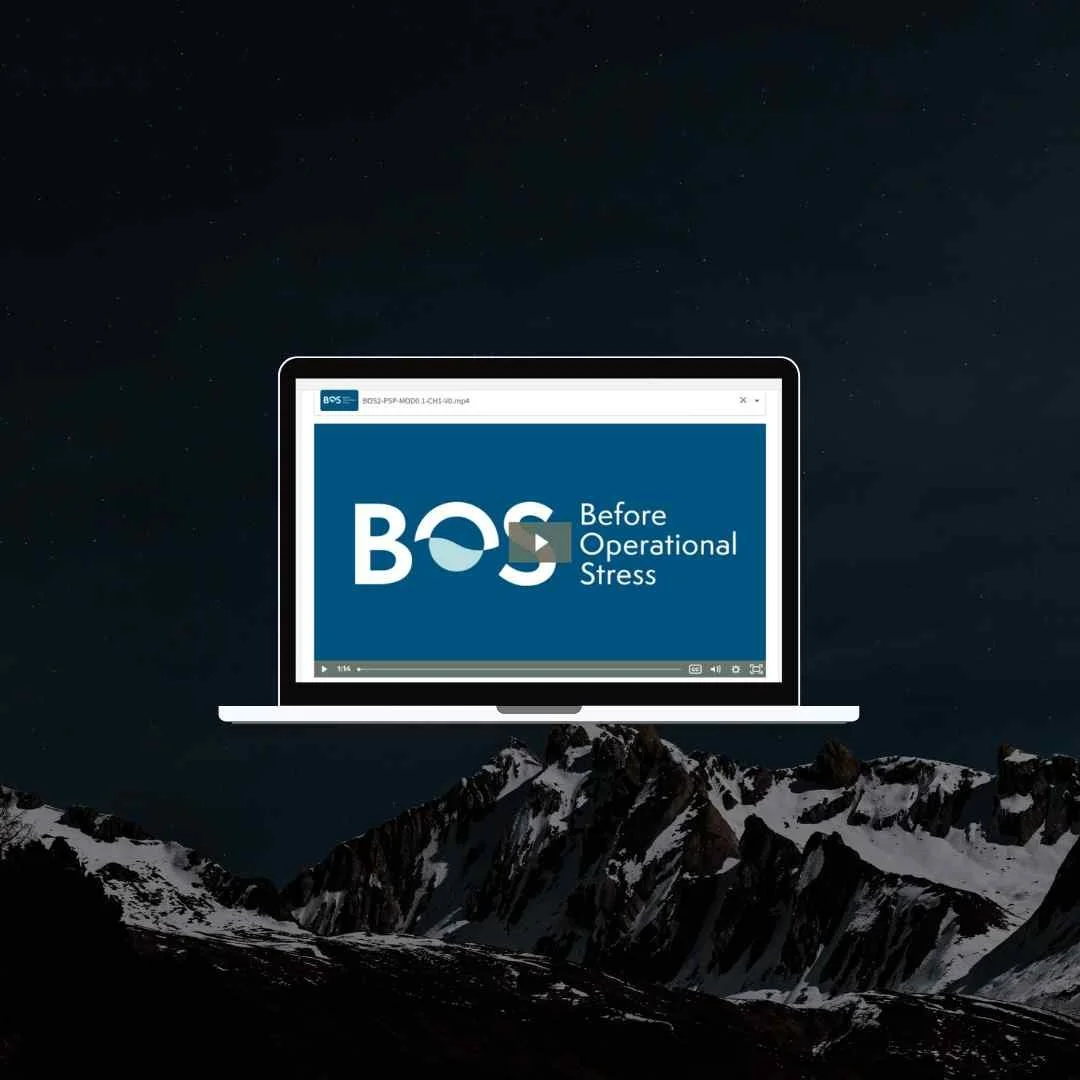
BOS On Demand is a self-directed online training program that gives trauma-exposed professionals the mental health tools they need, on their schedule, at their own pace, from anywhere. Eight evidence-informed modules cover the full spectrum of operational stress, from understanding how stress affects the brain to building long-term psychological resilience.
Ideal for individuals who want flexibility without sacrificing depth. No cohort schedules, no waiting on an organization to act. Just practical, evidence-based training available the moment you need it.
Format
Self-directed online
Duration
6-8 hrs, 8 modules, go at your own pace
Price
$200 one-time, 1 year access
Participants
Individual enrollment
Includes Therapy
No, psychoeducation only
Certificate
Yes, on completion
BOS Classroom
BOS Classroom brings the same evidence-based curriculum to life in a live, facilitated group setting. Delivered in person or via webinar, this program is for organizations that want to build a shared foundation of mental health awareness across their teams.
Ideal for new recruits, existing cohorts, peer support groups, and wellness teams. With flexible scheduling to fit organizational timelines, BOS Classroom is the most common entry point for departments and agencies investing in their people.
Format
Live in-person or online webinar
Duration
Approx. 8 hrs, flexible scheduling
Price
Group rate, contact us for a quote
Participants
We recommend group sizes under 30 participants, but will work with your organization to design cohorts and group sizes that fit your specific needs.
Includes Therapy
No, psychoeducation only
Best For
Departments, agencies, peer support groups

200+
COMPANIES ONBOARDED
From small agencies to large departments across North America.
100%
EVIDENCE-INFORMED TRAINING
Every module is grounded in clinical psychology and resilience science.
74,000
FIRST RESPONDERS HELPED
Firefighters, officers, paramedics, and frontline workers are better equipped with BOS.
Proud Partners

Trusted by fire departments, law enforcement agencies, and institutions across North America.




Access practical tools for frontline workers to manage operational stress
Frequently Asked Questions
Everything you need to know about BOS mental health training for 911 dispatchers, ECOs, and emergency communications centers.
-
Yes. BOS programs are built for trauma-exposed professionals, with content that reflects the specific psychological realities of emergency communications work. That includes secondary traumatic stress, compassion fatigue, the experience of processing calls without closure, shift work disruption, and the unique cultural challenge of being a first responder who is frequently left out of mental health conversations. The program was developed by leading mental health experts and psychologists with direct experience as first responders.
-
BOS On Demand is entirely self-paced, which makes it well-suited to EMS schedules. Most participants work through the 12 modules over several weeks, completing them between shifts or at home. There’s no expiry. Once purchased, you have lifetime access to revisit the material whenever you need it.
-
Yes. BOS Classroom delivers instructor-led group training directly to emergency communications centers and 911 agencies. Trauma-Informed Leadership training is also available for communications supervisors and center directors. Contact us to discuss agency-wide delivery formats and volume pricing for your team.
-
One of the most psychologically damaging aspects of dispatch work is handling a traumatic call and then immediately moving on to the next one with no information about outcomes. BOS includes a dedicated module on processing calls without closure, teaching dispatchers evidence-based strategies to manage unresolved emotional content and prevent it from accumulating over time into something they can no longer carry.
-
Yes. BOS was developed by leading mental health experts and psychologists using evidence-informed practices from clinical psychology, resilience science, and direct operational experience working with first responders. The program has been delivered to over 74,000 frontline professionals across North America.
-
BOS On Demand is a proactive training program focused on building resilience and preventing stress from progressing to more serious conditions. For dispatchers or ECOs already experiencing significant PTSD or trauma symptoms, BOS also offers Prolonged Exposure Therapy, a clinical-level treatment program delivered by licensed professionals who specialize in first responder and communications worker trauma.
-
Yes. Participants receive a completion certificate upon finishing BOS On Demand. This can be submitted to your agency for professional development records or used toward continuing education requirements.